To book: The ticket with audio guide and map, from $32 per person. Check dates Tour details
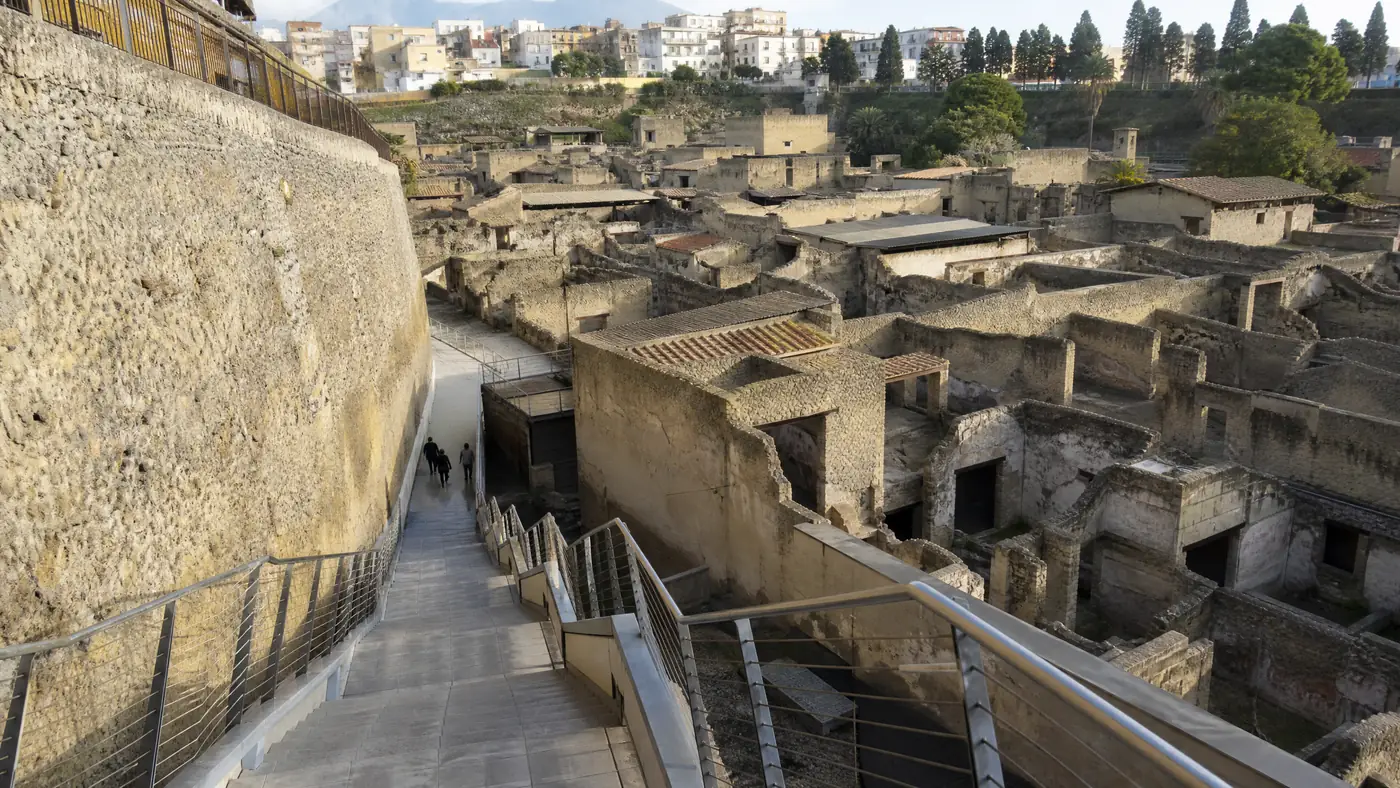
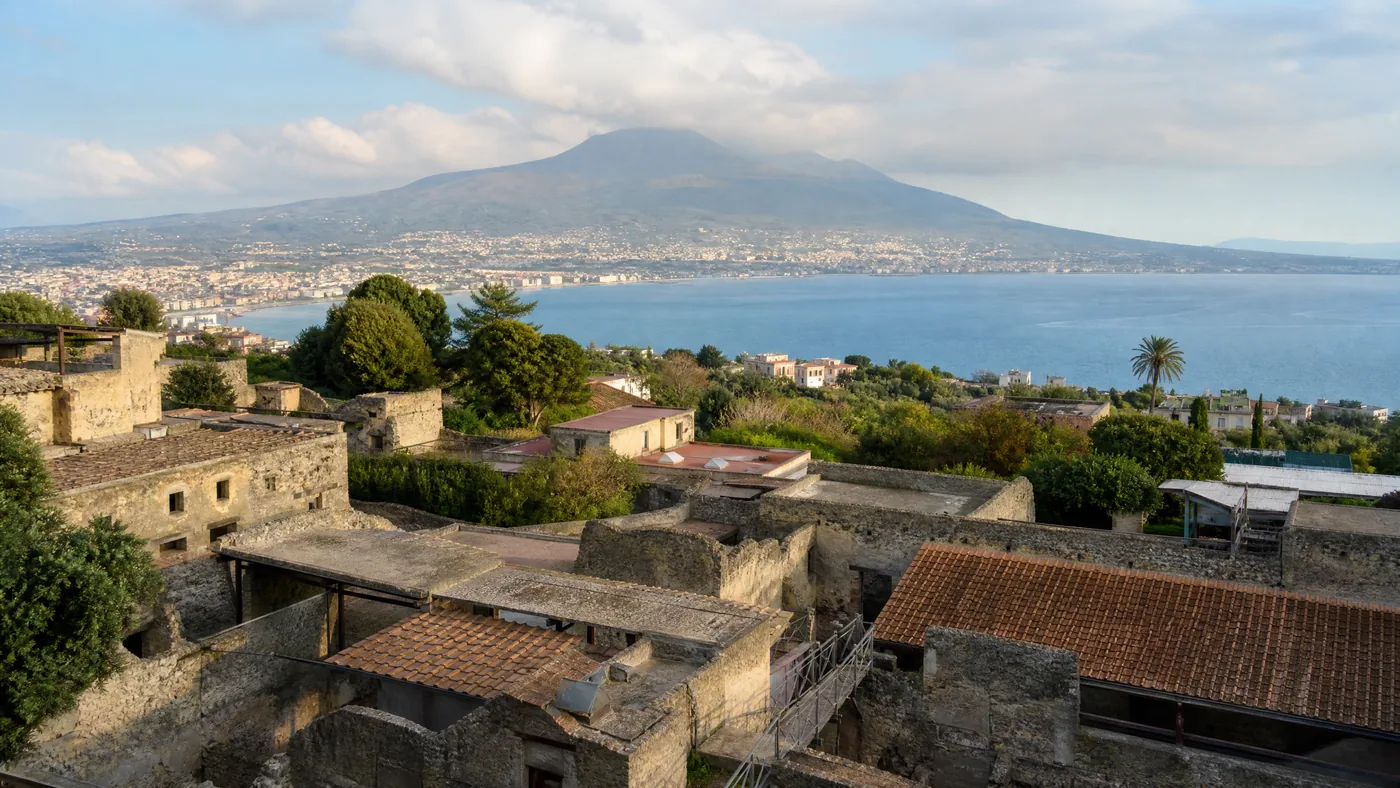
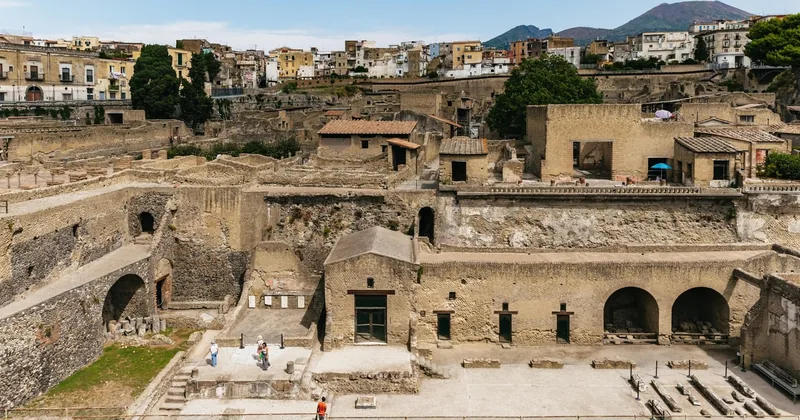
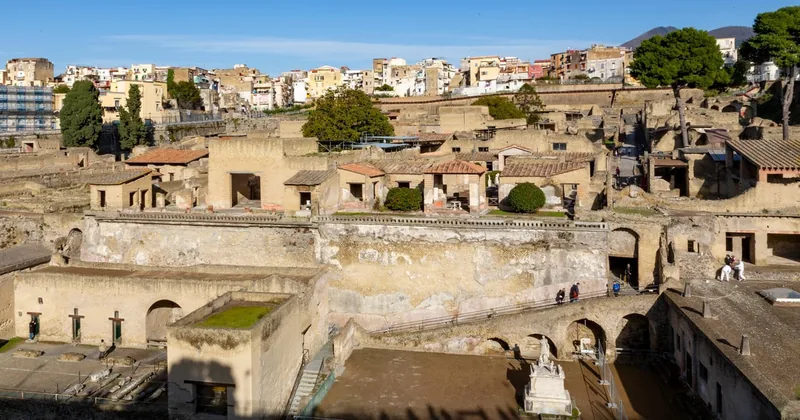
Herculaneum was a city by the sea, on a plateau between two streams, with Vesuvius behind it. The eruption of AD 79 buried it under about 20 metres of volcanic material, and that very material has preserved things that have disappeared elsewhere: wood, food, fabrics. Of the city, about 20 hectares in size, today more than four are visible.
The Park describes its areas on the Archaeological area page. Here we list the stops with the names used by the Park, so you can find them on the map. A warning applies to the whole guide: some houses close in turn for works, and the Park lists them in the Notices.
The answer in brief
The recommended route enters via the descending ramp and exits via the bridge of Cardo III. The main stops are the ancient beach with the fornici, the sacred area with the terrace of Nonius Balbus, the Casa del Rilievo di Telefo, the Casa dei Cervi, the Palestra, the Terme Centrali, the Casa di Nettuno e Anfitrite, the Sede degli Augustali and the Decumano Massimo, then the Antiquarium and the Padiglione della barca. The Villa dei Papiri and the Theatre are closed.
What is the recommended route in the excavations?
You enter via the ramp that descends towards the ancient city and exit via the bridge reached from Cardo III. Those who have difficulty with the ramp can use the bridge in both directions.
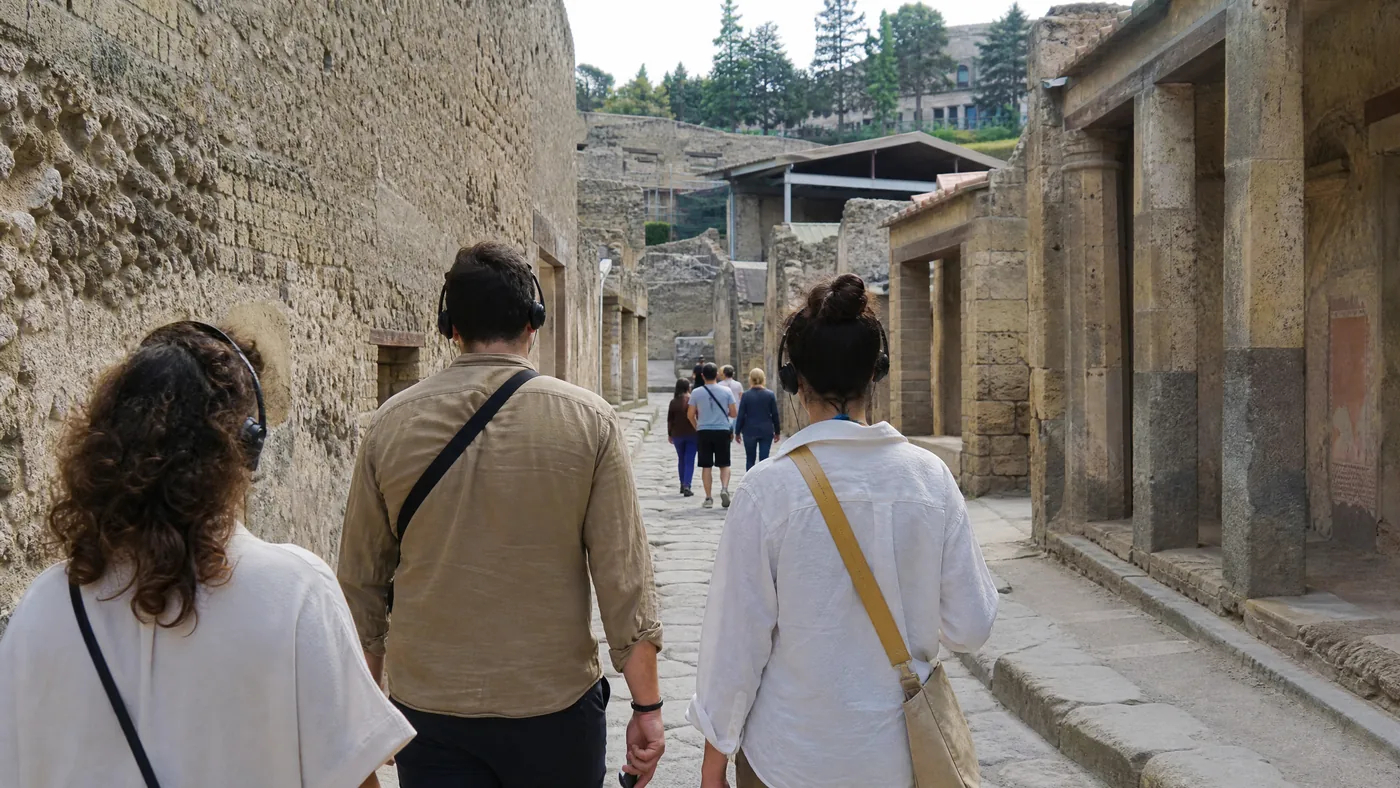
Download the map from the Maps and mini guides page: there are also mini guides in Italian, English, German, French and Spanish. On the map, buildings have the number of the official audio guide in square brackets, so you can go from the map to the audio without getting lost. The visit lasts about 2 hours.
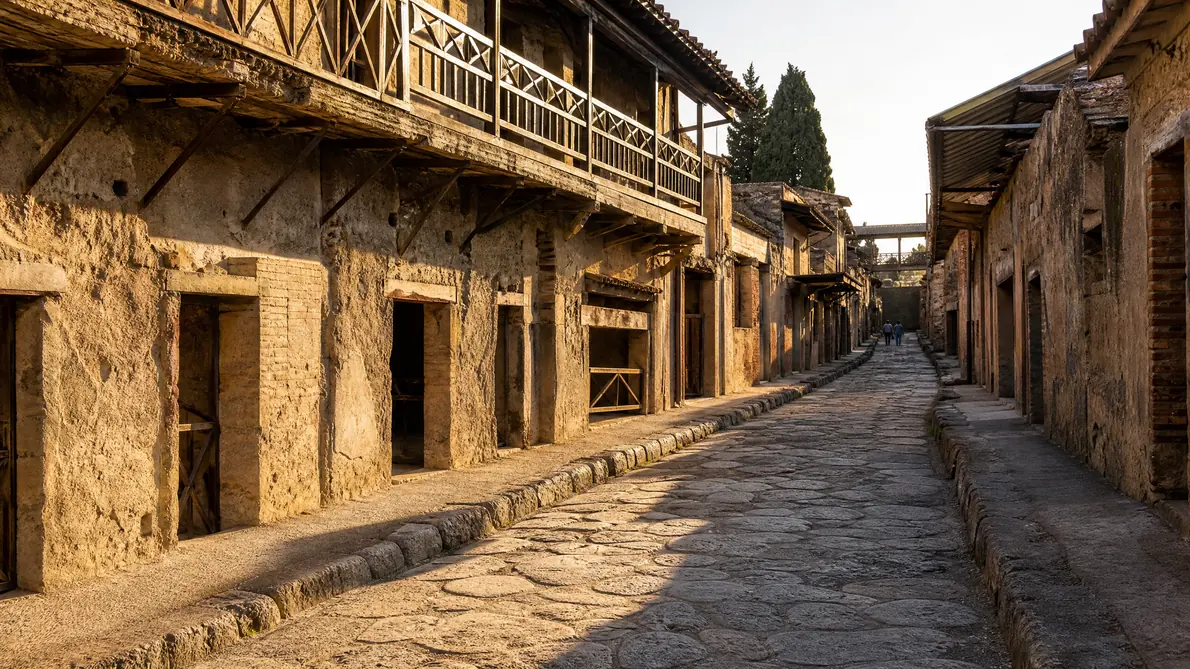
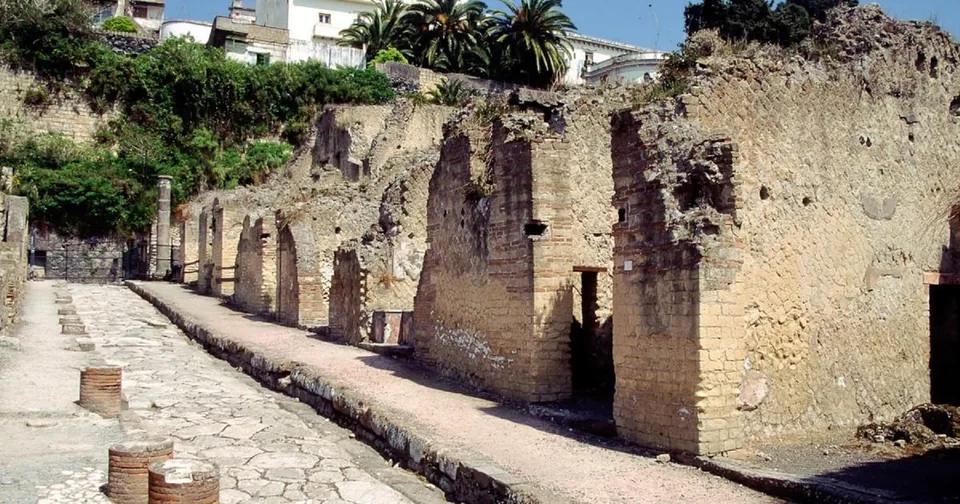
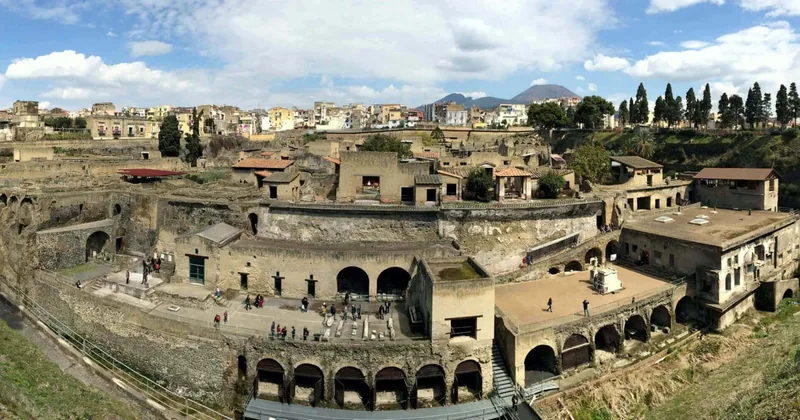
The streets follow a regular grid: the decumani run parallel to the coast, the cardini cut them at right angles. The Decumano Massimo today marks the boundary between the excavated area and the one still buried under Corso Resina.
What is on the ancient beach?
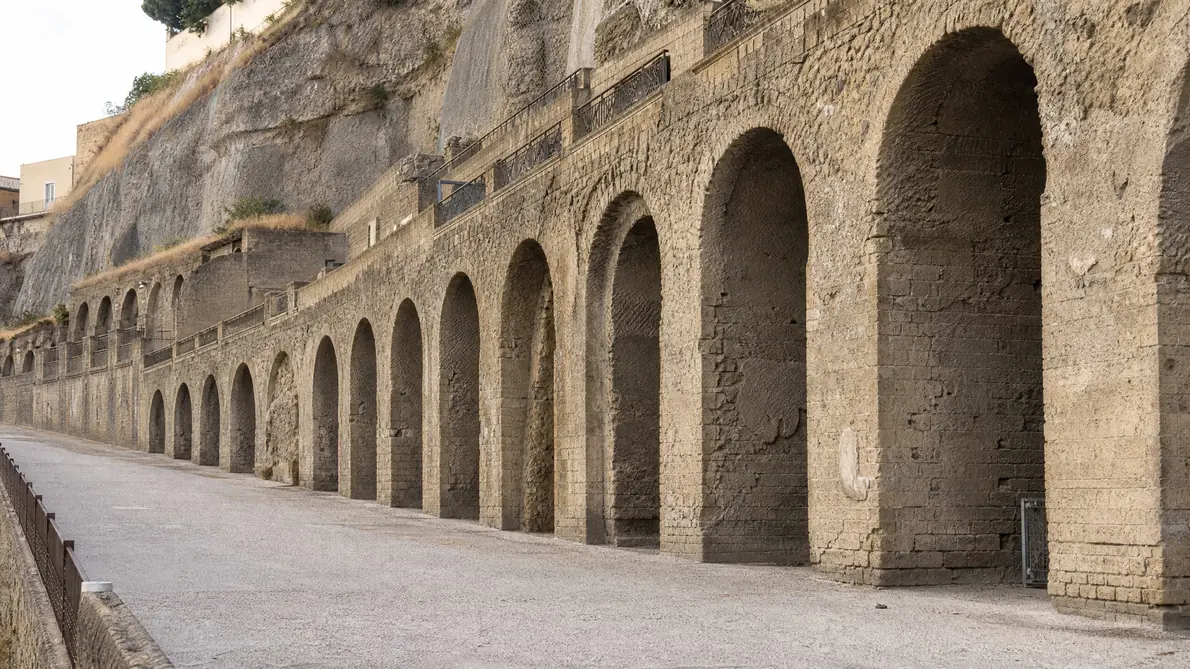
The fornici, the twelve arches that opened onto the beach. In nine of these, in 1980, about 300 skeletons of fleeing people were found, with the objects they had brought with them.
They were probably warehouses or shelters for boats, the Park writes on the fugitives page. Next to the victims were jewellery, coins, house keys, amulets, work tools and a surgeon's set. They were women and men, young and old, free and slaves: for scholars, they are a rare sample of people who lived in the same period and died at the same time.
Are they real skeletons? Yes. And they explain why for centuries few victims were found at Herculaneum: the beach, where many had sought refuge towards the sea, was only excavated in the 1980s. Since July 2026 the Galleria Martusciello towards the Antica Spiaggia has been open again.
Who was Marcus Nonius Balbus and what is in the sacred area?
He was the protector of the city. On the southern terrace there are his statue and his funerary altar, next to the sanctuary of Venus.
Nonius Balbus also had the Terme Suburbane built, at the beginning of the 1st century AD. The Park defines them as 'one of the best-preserved thermal buildings of the Roman world'. They can only be visited during special guided openings: on 2 October 2026 the Park announced a new series, but without dates we can report. Another statue of Marcus Nonius Balbus is in the Antiquarium.
The excavations with an archaeologist guide, the ticket and headsets: the listing names the Sede degli Augustali and the Casa di Nettuno e Anfitrite.
Check dates for the guided tour with an archaeologistWhich houses to see at the Herculaneum excavations?
There are dozens on the Park's map. Among the most cited: the Casa del Rilievo di Telefo, the Casa dei Cervi, the Casa di Nettuno e Anfitrite, the Casa del Tramezzo di Legno, the Casa Sannitica and the Casa del Bicentenario.
- The Casa del Rilievo di Telefo. Inside is the Giardino degli Ozi, a green area shaded by pomegranate trees, included in the ticket. From the collapsed roof of one of its rooms emerged a coffered wooden ceiling with inlays and traces of gilding, the Park explains on its page about organic finds.
- The Casa dei Cervi. The marble sculptures from its garden are in the Antiquarium. It was closed for works from 25 March to 16 September 2026.
- The Casa di Nettuno e Anfitrite. The listing for the visit from Naples cites the wall mosaic in glass paste with the two marine deities.
- The Casa del Tramezzo di Legno. It takes its name from an internal wooden partition wall, explains the same listing.
- The Casa Sannitica, the Casa dell'Alcova, the Casa di Argo, the Casa del Gran Portale. They are all marked on the Park's map.
No house is guaranteed to be open on the day of your visit: check the Notices before you leave.
Which public buildings can be seen?
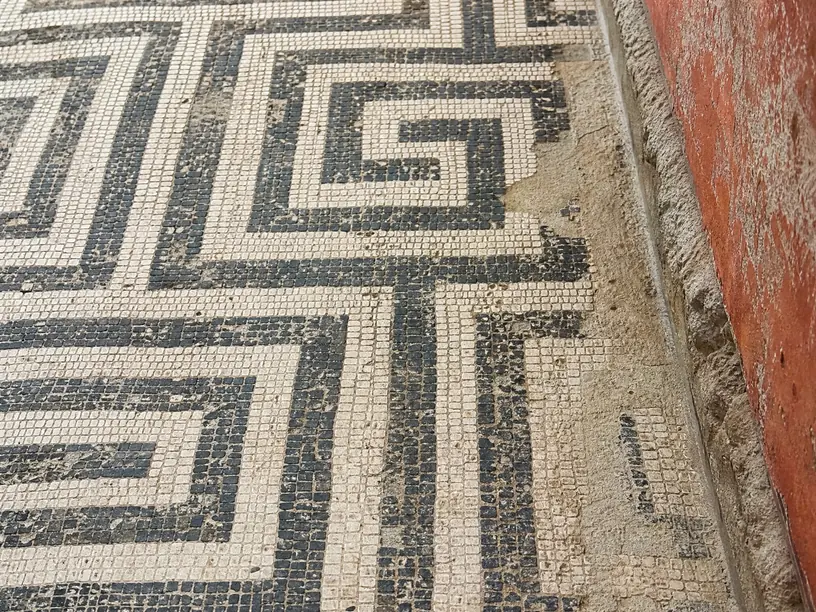
The Palestra, the Terme Centrali and the Sede degli Augustali, among the few public buildings brought to light. On the map there are also the Thermopolium and the Pistrinum of Sextus Patulcius Felix.
The Palestra, with its large cross-shaped pool, has only been partially excavated. The Terme Centrali have two sections, one for men and one for women. The public area of the city has only been touched by open-air excavations, the Park explains: the Basilica Noniana and the Augusteum were explored with the Bourbon tunnels and remain buried.
The Theatre, from the Augustan age, with about 2,500 seats, is closed until a date to be defined. The Park tells its history on the theatre page.
The ticket with audio guide and map, in the option with ticket: to find houses and baths on your own and stop as long as you like.
Discover the ticket with audio guide and map Tour detailsWhat is in the Antiquarium and the Padiglione della barca?
In the Antiquarium there is the statue of Marcus Nonius Balbus, the Lernaean Hydra in bronze, sculptures from the garden of the Casa dei Cervi, frescoes from the Villa dei Papiri and a room with objects found next to the fugitives. In the Padiglione there is the boat.
The exhibition has been permanent since December 2018. The boat was found on 3 August 1982 in front of the Terme Suburbane: it is over 9 metres long and may be a military launch from Plinio il Vecchio's fleet, which set out from Miseno to bring aid. Not far away, the skeleton of a soldier with a sword and dagger was found. The details are on the page Antiquarium e Padiglione Barca.
Near the Antiquarium there is a shaded green area with benches. Dogs are only allowed in arms or in a carrier.
Why has wood been preserved at Herculaneum?
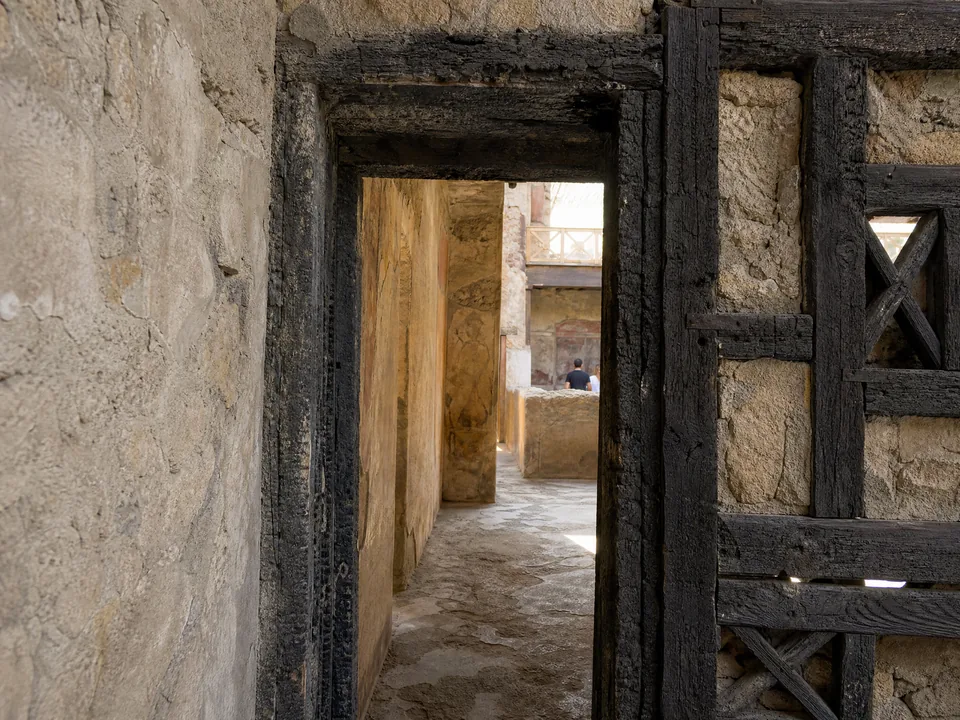
Because the pyroclastic surges of the eruption carbonised organic substances. This is how furniture, doors, stairs, a press, small boats, food, seeds, fabrics, ropes, wax tablets and papyri have been preserved.
The papyri mostly come from the Villa dei Papiri: over 1,800 carbonised scrolls, «the only [library] intact from the ancient world» according to the Park. The Villa is closed and does not yet have a reopening date. Its history is on the Villa dei Papiri page, and some of its frescoes are in the Antiquarium.
Is Herculaneum still being excavated? And what is it called today?
Today the work is mainly conservation and restoration, with targeted excavation campaigns. The modern city has been called Ercolano since 1969; before that it was called Resina.
Since 2001 there has been the Herculaneum Conservation Project, with the Packard Humanities Institute and the Ministry; since 2016 the Park has been an autonomous institute. With the Progetto Domus, the Casa del Colonnato Tuscanico and the Casa del Sacello di Legno reopened in March 2025, the Casa del Mobilio Carbonizzato in July 2026. In June 2026 the Calcidico route reopened, «after twenty years». The reopening of the Casa dell'Atrio a Mosaico and the Casa a Graticcio has been announced, with a press conference scheduled for 21 October 2026.
All dates are in the article on 2026 news.
Frequently asked questions
Can the Villa dei Papiri be visited?
No. It is closed and the Park states that the reopening date has not yet been defined.
Is the Theatre of Herculaneum open?
No. The Teatro antico remains closed until a date to be defined for extraordinary maintenance work.
Are the skeletons of Herculaneum real?
Yes. About 300 skeletons were found in 1980 in nine of the twelve fornici of the ancient beach, with the objects the people had brought with them.
How big is the visitable area?
The ancient city measured about 20 hectares within the walls; today more than four are visible.
Ready to book
Choose your visit
Free cancellation on every option, up to 24 hours before. Prices are starting prices in USD and change with the season.
Guided tour with an archaeologist
- Entry ticket to the Herculaneum excavations
- Tour with an archaeologist guide
- Headsets
Ticket with audio guide and map
- Entry ticket to the Herculaneum excavations (in the option with ticket)
- Audio guide
- Map
From Naples: guided tour with ticket
- Entry ticket to the Herculaneum excavations
- 2-hour guided tour (from 6 participants; below that, audio guide)
- Round trip from Naples, if chosen